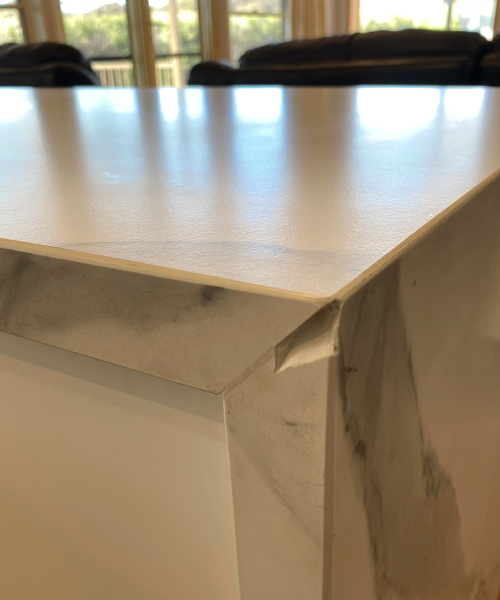
You’ve invested thousands in a beautiful stone benchtop – whether it’s luxurious marble, durable granite, or modern engineered stone like Caesarstone or Smartstone. They look stunning, they’re practical, and they’re built to last.
Until that heart-stopping moment when you hear the unmistakable sound of something heavy hitting the surface, and you discover a chip that seems to mock you every time you walk into the kitchen.
Before you panic about expensive replacements, let’s talk about what actually causes stone benchtop chips, how you can prevent them, and what to do when damage happens.
Understanding Your Stone Benchtop
First, it’s helpful to understand what you’re dealing with:
Natural Stone (Marble, Granite, Limestone, Travertine)
- Formed naturally over millions of years
- Each piece is completely unique
- More porous than engineered stone
- Can be more susceptible to certain types of damage
- Absolutely stunning and timeless
Engineered Stone (Caesarstone, Smartstone, Essastone, Quantum Quartz, Silestone)
- Manufactured from approximately 90-95% natural quartz mixed with resins and pigments
- More consistent in pattern and color
- Less porous than natural stone
- Extremely hard but can still chip
- Modern and versatile
Both types are incredibly durable, but they’re not indestructible. Understanding what causes damage helps you protect your investment.
Common Causes of Stone Benchtop Chips
- Heavy Objects Dropped on Edges This is the number one culprit. Cast iron pots, heavy appliances, wine bottles, even a ceramic mixing bowl dropped from height can cause edge chips. The edges are the most vulnerable part of any benchtop because there’s less material to absorb the impact.
- Impact from Metal Cookware Sliding a heavy pot across the benchtop or accidentally hitting the edge with a pan handle can chip both natural and engineered stone. Metal-on-stone contact at force is a recipe for damage. This is more common with the lip of an under-mounted sink, where the sink sits below the stone benchtop.
- Moving Appliances Carelessly When you’re rearranging your kitchen or moving in/out, heavy appliances like stand mixers, coffee machines, or food processors can easily chip benchtops if knocked against edges.
- Installation and Renovation Accidents Many chips occur during the installation process itself or during other renovation work. Tradespeople accidentally dropping tools, ladders hitting corners, or other construction activities can cause damage to brand new benchtops.
- Structural Settling In rare cases, house settling or movement in the cabinetry underneath can create stress points that result in cracks or chips, particularly at joins or weak points.
- Thermal Shock While not as common, placing extremely hot items directly on cold stone (or vice versa) can occasionally cause cracking in natural stone, which may eventually lead to chips. This is becoming more common with the increase in air fryers being operated directly on stone benchtops.
- Excessive Force on Unsupported Areas Standing or sitting on benchtops (especially overhangs or unsupported sections) or placing excessive weight on areas without proper support underneath can cause cracks and chips.
- Natural Flaws or Weak Points Sometimes stone has natural fissures or weak points that aren’t immediately visible. These areas are more susceptible to chipping when subjected to impact or stress.
How to Prevent Stone Benchtop Chips
Prevention is always better (and cheaper!) than repair. Here’s how to protect your investment:
Kitchen Habits
- Always use trivets or hot pads under hot pots and pans – never place them directly on stone
- Lift, don’t slide heavy cookware across the surface
- Use cutting boards for all food preparation – knives won’t chip stone, but dropped knives or heavy chopping can
- Be mindful near edges – this is where most damage occurs
- Place protective pads under heavy appliances, particularly a protective board under an air fryer
- Organize carefully – store heavy items away from the benchtop edge to prevent accidental knocks
During Renovations or Moving
- Protect surfaces with thick blankets or protective covering if other trades are working in your kitchen
- Supervise carefully during installation or any work involving the benchtops
- Mark vulnerable areas so tradespeople know to take extra care
- Move appliances carefully – lift and place rather than drag
Long-Term Care
- Seal natural stone regularly (every 1-2 years) to protect from staining and moisture penetration
- Clean properly – use pH-neutral cleaners, never harsh chemicals or abrasive scrubbers
- Address issues promptly – small chips can become larger problems if moisture gets underneath
- Avoid standing on benchtops – use a proper step stool for reaching high cabinets
Specific Tips for Natural Stone
- Avoid acidic substances – lemon juice, vinegar, wine, coffee can etch marble and limestone
- Wipe spills immediately – natural stone is porous and can stain
- Use coasters under glasses and bottles
- Be extra gentle with softer stones like marble
Specific Tips for Engineered Stone
- Still use trivets – while more heat-resistant than some natural stones, prolonged heat can still damage the resin
- Avoid harsh chemicals – bleach and strong cleaners can damage the surface
- Don’t use as a cutting board – while very hard, repeated cutting can eventually dull the finish
What to Do When Chips Happen
Despite your best efforts, accidents happen. Here’s your action plan:
Immediate Steps
- Don’t panic – many chips are repairable
- Keep any broken pieces – sometimes these can be useful for colour matching
- Take photos – document the damage from multiple angles
- Clean the area gently – remove any debris but don’t try to “fix” it yourself with glue or fillers
- Assess the damage – is it a surface chip, edge chip, or deeper structural damage?
Professional Assessment Contact a stone chip repair specialist (like FIX ‘N’ CHIPS) for a professional evaluation. We often provide a quote from photos, saving you the cost and time of an unnecessary site visit.
Understanding What’s Repairable Most benchtop chips CAN be professionally repaired, including:
- Edge chips and corner damage
- Surface chips (smaller than a 50-cent piece)
- Multiple small chips in the same area
- Chips that expose the underlying material
- Scratches and surface damage
What’s More Challenging
- Large cracks affecting structural integrity
- Extensive damage across multiple areas
- Damage combined with significant water penetration to substrate
- Chips in areas where the benchtop has separated or is no longer level
- Chips on the top surface of the bench with large amounts of natural light are more likely to be highly visible after a repair
The Professional Stone Benchtop Repair Process
Here’s what happens when you choose professional stone benchtop repair over replacement:
Step 1: Assessment A technician evaluates the damage, your stone type, colour, finish, and provides an honest assessment of what’s possible.
Step 2: Preparation The damaged area is thoroughly cleaned and prepared, creating the perfect surface for repair materials to bond.
Step 3: Colour Matching This is where expertise really matters. Professional technicians custom-mix colours to match your exact stone. This starts with the base colour but can also include recreating the veining, patterns, and depth of natural stone.
Step 4: Filling Using specialized fillers (much more advanced than DIY kits), the chip is carefully filled and shaped to match the original contour.
Step 5: Finishing and Sealing The repair is sealed for protection and durability to match your benchtop finish (e.g. matte or gloss).
Step 6: Quality Check The repair is inspected from multiple angles and under different lighting to ensure it’s no longer the first thing you see.
The entire process typically takes 1-2 hours, and costs a lot less than replacement. You can read more about the FIX ‘N’ CHIPS repair process here.
Stone Benchtop Professional Repair vs. Replacement: The Reality Check
Let’s talk dollars and sense:
Replacement Costs:
- New benchtop: $3,000-$8,000+ (depending on material and size)
- Removal and disposal: $300-$600
- Installation: $500-$1,200
- Potential plumbing adjustments: $200-$500
- Risk of damaging surrounding tiles or splashback: Let’s hope this doesn’t happen!
- Time without a kitchen: 1-2 weeks minimum
- Total: $4,000-$10,000+ and major disruption
Professional Repair:
- Repair cost: $300-$500 (depending on extent of damage)
- Time to complete: 1-2 hours
- Disruption: Minimal
- Risk of additional damage: None
- Total: A few hundred dollars and back to normal the same day
Real Results from Real Repairs
Our customers consistently report being amazed by professional FIX ‘N’ CHIPS repairs:
Gus’s customer, Michelle, shared: “I was absolutely amazed at the repair and colour matching to the point you would never know there was any damage done.”
Gary’s customer, Andrew, said: “Gary came over to fix my benchtop that was chipped, I can’t even tell where it was! Fantastic job!!”
Rob’s customer, Sandy, reported: “He repaired a large chip in our smartstone benchtop and you cannot see where it was repaired.”
These aren’t isolated experiences – they’re what’s possible when repairs are done by experienced professionals using proper techniques and materials, in the right conditions.
Why DIY Stone Benchtop Repairs Usually Fail
We understand the temptation to try DIY repair kits. After all, they can be relatively cheap seem straightforward.
Here’s why they typically disappoint:
Limited Colour Matching DIY kits offer basic colours. Your stone has depth, variation, veining, and unique characteristics that a single-colour filler simply can’t replicate. The result? A visible patch that’s often more noticeable than the original chip.
Poor Bonding Without proper surface preparation and professional-grade materials, DIY repairs often fail within weeks or months, chipping out again and leaving you worse off than before.
Wrong Finish Matching the sheen level (polished, honed, matte) requires specific techniques and materials. DIY kits typically leave a finish that doesn’t match.
No Texture Recreation Natural stone has texture and depth. Filling a chip with flat filler looks exactly like what it is – a patch job.
Permanent Damage Risk Some DIY attempts actually make the damage worse or create issues that make professional repair more difficult or impossible.
When to Consider Replacement
There are situations where replacing your stone benchtop might be the better option:
- Damage covers more than 30% of the benchtop
- Multiple large cracks affecting structural integrity
- The benchtop is extremely old and deteriorating
- You’re doing a complete kitchen renovation anyway
- The stone has significant water damage to the substrate underneath
For most single chips or even multiple small areas of damage, professional repair is absolutely the smart choice.
Questions to Ask a Benchtop Chip Repair Specialist
Not all repair services are equal. Here’s what to ask:
- Can I see examples of previous repairs on similar stone?
- Do you provide a warranty on your repairs?
- How do you match the colour and texture of my specific stone?
- Can you provide a quote from photos before a site visit?
- What’s your experience with my specific stone type?
At FIX ‘N’ CHIPS, we have over 20 years of experience, use market-leading repair materials, and our repairs come with a warranty. We’re specialists in stone benchtop repair – it’s not a sideline, it’s our core expertise.
Protecting Your Benchtop Chip Repair Long-Term
Once your benchtop chip is professionally repaired, protect your investment:
- Follow all the prevention tips mentioned earlier
- Have natural stone sealed regularly
- Clean gently and appropriately for your stone type
- Address any new damage quickly before it worsens
Professional repairs, when properly maintained, can last a long time and remain no longer the first thing you see.
Don’t Let Your Stone Benchtop Chip Ruin Your Home
Stone benchtop chips are frustrating, but they don’t have to be catastrophic. With proper prevention, most stone benchtop chips can be avoided. When damage does occur, professional repair is almost always the smart, economical choice over replacement.
Don’t let a small benchtop chip turn into a large expense. Don’t settle for visible DIY patches. And definitely don’t live with damage that bothers you every time you walk into your kitchen.
Professional stone benchtop repair can be so seamlessly that even you’ll forget where the damage was.
Discovered a chip in your stone benchtop?
Contact FIX ‘N’ CHIPS today for a free assessment. We service homes across Victoria, Queensland, and Tasmania with exclusive local franchisees who are specialists in stone benchtop repair, plus you’re dealing with the business owner. Call 1300 349 624 or submit an online enquiry today for a free quote